
NDC: Full-funnel Tracking Implementation
New Dawn Construction was working with two disconnected CRMs, unreliable ad tracking, and lead sources recorded manually by asking each lead. We rebuilt the funnel end-to-end so every lead is captured automatically with full session data, attributed to its source, and fed back into Google Ads as real, CRM-verified conversion data.

METRICS & OUTCOMES
CHALLENGE
Scope: Full-funnel tracking implementation for a lead generation project, from ad click to qualified lead, across ads, website, call tracking, and two CRMs.
Platforms: Google Ads, GA4, Google Tag Manager, Motion CRM (GoHighLevel / LeadConnector based), Quickbase, Zapier.
New Dawn Construction was working with two disconnected CRMs, unreliable ad tracking, and lead sources recorded manually by asking each lead. As a result, there was no clear view of how each channel contributed to actual sales, which made it hard to measure source performance, track trends over time, or make confident optimization decisions.
Before NeaMob
Google Ads tracking that couldn’t be trusted
- Online events only. No offline conversions were sent from the CRM, so Google Ads had no visibility into which clicks turned into real leads.
- Call conversion didn’t work at all, in a business where calls are a primary flow.
- The only event in use, the contact form, was inflated. It fired on every button click, even when the form was incomplete or never submitted.
- Missing best-practice settings, including Enhanced Conversions, which reduced Google’s ability to match leads to users and optimize bidding.
No single source of truth
- The client used two CRMs, which were not synced with each other.
- Some leads existed only in one CRM, and some only in the other. Neither held a complete or reliable picture of the pipeline.
Leads entered manually
- There was no automated lead capture. Most leads were typed into the CRM by the sales team by hand.
- This meant delays, typos, missing information, and, inevitably, lost leads.
Blind to lead sources, especially for calls
- There was no source tracking in place. For phone calls, the business was completely blind: attribution came down to guesswork or asking the caller, “How did you hear about us?”
- The result: unreliable attribution, which led to unreliable reporting and optimization decisions based on incomplete data.
No lead quality metric
- Performance was measured only by total leads and closed customers.
- Nothing in between showed whether marketing was bringing in good-quality leads or just a high volume of cheap ones.
Follow-up automations that never worked
- Automated SMS and email sequences for scheduling attempts (trying to book a consultation with new leads) were technically configured, but never actually sent to the leads. Leads that didn’t answer the first call were at risk of going cold.
No documentation
- Parts of the stack had been set up over the years, but nobody knew exactly how it all worked or connected.
SOLUTION
Before making any changes, we audited the existing setup to understand how it worked and whether the client’s current CRMs could support everything needed for full-funnel tracking — so we could avoid a CRM migration and any disruption to the client’s processes. The audit confirmed they could, allowing us to deliver the full setup within the existing stack and keep the client’s workflows and software costs unchanged.
The resulting architecture gives each CRM a clear role:
- Motion — Main marketing CRM. Rich integrations and tracking features. Handles lead capture, attribution, call tracking, automations, and conversion events.
- Quickbase — Main business CRM. Used by the sales team to manage leads through the full sales and other processes, from first contact to service delivery.
Rebuilt Google Ads online conversion tracking (via GTM)
- Created a clean set of events, each firing correctly across the whole website:
- Click to Call – phone number clicks;
- Book Appointment – “Book Your Free Consultation” form;
- Request Quote – “Get Your Free Quote” form;
- Form Submission – all other website forms.
- Split form events by flow, so conversion rates can be measured and optimized for each form separately.
- All form events now fire only after a successful submission, eliminating false conversions and duplicates.
- Mirrored all events in GA4 for consistent reporting.
Set up offline conversions from the CRM
- Motion now sends CRM-verified events back to Google Ads and GA4:
- CRM Lead – a real lead was created in the CRM;
- CRM Qualified Lead / CRM Unqualified Lead – based on the sales team’s lead quality assessment.
- This feeds Google’s algorithm with real business outcomes instead of website clicks, and opens the door to value-based bidding.
Configured Enhanced Conversions
- Enabled Enhanced Conversions, which uses hashed first-party data to match conversions to Google users more accurately.
- Why it matters: with cookie restrictions, cross-device journeys, and privacy changes, a meaningful share of conversions can’t be matched through cookies alone. Enhanced Conversions recovers that signal, improving measurement accuracy and giving Smart Bidding more data to learn from.
Implemented call tracking with Dynamic Number Insertion (DNI)
- Set up dedicated tracking number pools per source: Google Ads, Google Local Services Ads, Google Business Profile (GMB), Yelp, and Organic.
- Each visitor sees a phone number matching the source that brought them, and it stays consistent across all pages and new tabs throughout the session.
- Every call is now attributed to its source automatically. No more guessing.
Automated lead capture for every channel
- All website forms, inbound calls, appointment bookings, and inbound SMS are created in Motion automatically, in real time, removing the human factor from lead entry.
- Covers all main acquisition channels: Google Ads, Google Organic, Google Business Profile, Google Local Services Ads and Yelp.
- Leads that can’t be captured automatically (e.g., referrals, emails, direct messages) are added in Quickbase by the client manually and synced over with Motion, so nothing falls outside the system.
Enriched every lead with attribution data
- Each lead now arrives with the full context needed for analysis and optimization:
- UTMs (source, medium, campaign, content, and keyword);
- Landing page URL;
- Google Click ID (GCLID);
- Lead Source;
- Entry Point (how the lead came in: form, call, appointment, SMS, etc.).
Introduced a new Qualified Lead metric
- Added a lead quality field (Qualified / Unqualified).
- Worked with the sales team to have it filled in for every new lead.
- This gives both marketing and the business an early read on lead quality, so campaigns can be adjusted within days.
- It also powers the CRM Qualified Lead conversion sent to Google Ads.
Two-way CRM sync
- Set up Zapier integration between two CRMs so a new lead in either CRM is automatically created in the other.
- Quickbase also pushes key sales updates back to Motion, keeping marketing data in step with the sales pipeline.
Fixed follow-up automations
- Rebuilt the SMS and email scheduling-attempt sequences based on the client’s own lead flow chart:
- Short-term (Days 1–4): follow-ups triggered by the number of scheduling attempts after each call attempt;
- Long term (1, 3 and 6 months): re-engagement messages for leads that couldn’t be reached.
- Internal notifications alert the sales team instantly by email and SMS whenever a new lead arrives.
Documented everything
- Created full documentation of the setup: how each piece works, how the systems connect, field logic, workflows, and integrations.
- Created a step-by-step QA process (with video walkthroughs) for DNI, forms, online events, and CRM sync.
- Built a lead flow and tracking infrastructure map.
- The result: the setup is transparent and transferable. Our team can onboard new people quickly; the client understands their own stack, and if the client ever moves on, the next team won’t have to start from zero.
WHAT WE DID
RESULTS
Before vs After NeaMob
| Area | Before | After |
|---|---|---|
| Source of truth | Two unsynced CRMs, both incomplete | Two fully synced CRMs with matching lead counts |
| Lead entry | Mostly manual by sales team | Automatic and real-time for all main channels |
| Call attribution | None | DNI tracking numbers per source |
| Lead data | Minimal | UTMs, landing page, GCLID, entry point, etc. |
| Lead quality | Not measured | Qualified Lead metric tracked for every lead |
| Google Ads online conversions | One inflated form event; call event broken | Separate, accurate events per action and form |
| Google Ads offline conversions | None | CRM Lead, Qualified Lead, Unqualified Lead |
| Google Ads Enhanced Conversions | Not set up | Configured |
| Follow-up automations | Configured but not working | Working short- and long-term sequences |
| Documentation | None | Full setup docs, QA process, infrastructure map |
The impact in numbers
Data: raw lead exports from both CRMs, January 1 – September 24, 2026. Leads were matched across CRMs by phone, email, or name.
Leads missing from one of the two CRMs
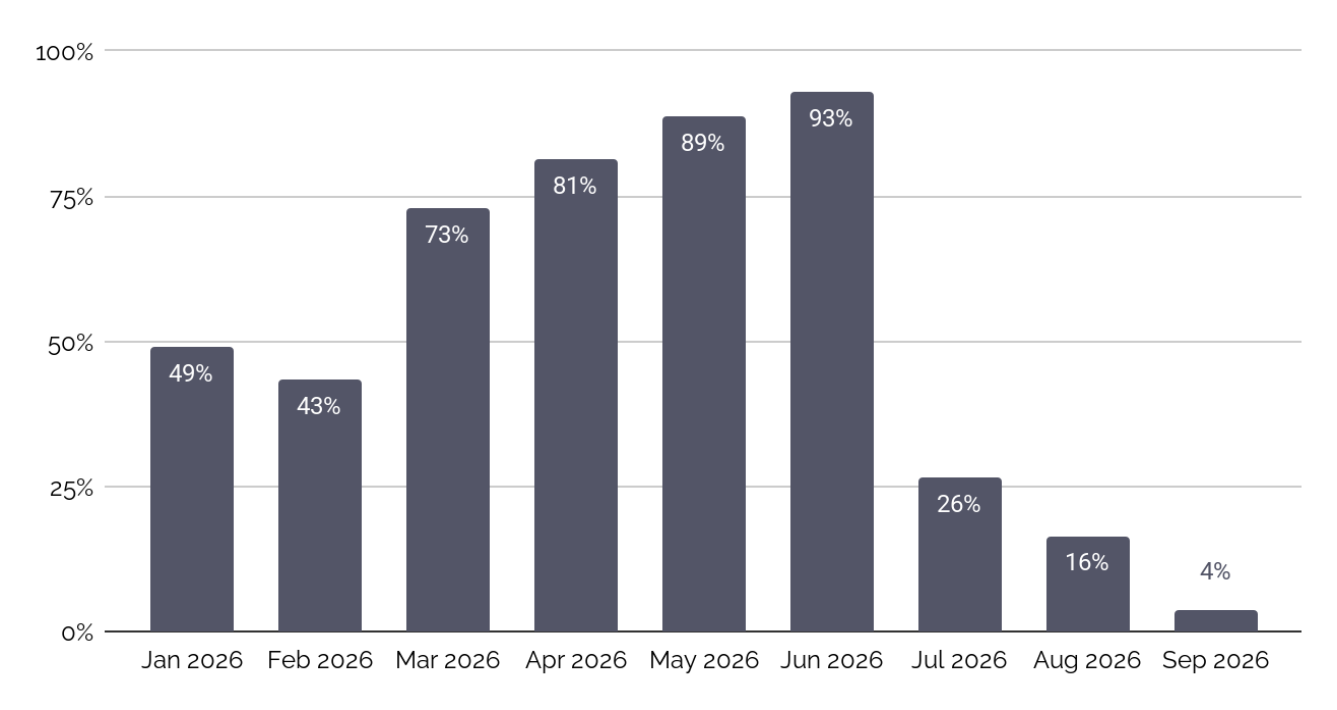
- Leads missing from one of the CRMs dropped from ~70% (Jan–Jun) to under 4% (September).
- January–February (~45–50%): the starting point. About half of all leads existed in only one of the two CRMs.
- March–June (rising to ~93%): we began setting up the creation of leads automatically in the marketing CRM (Motion), which increased the gap between the two CRMs, as Quickbase leads were still entered manually by the sales team.
- July–August: we started implementing the two-way sync between the CRMs, and the gap dropped sharply.
- September (3.7%): the CRMs are fully in sync. The small remaining difference is a handful of contacts that are excluded from sync by design (e.g., spam or test leads) or removed by the team after review.
Leads captured automatically
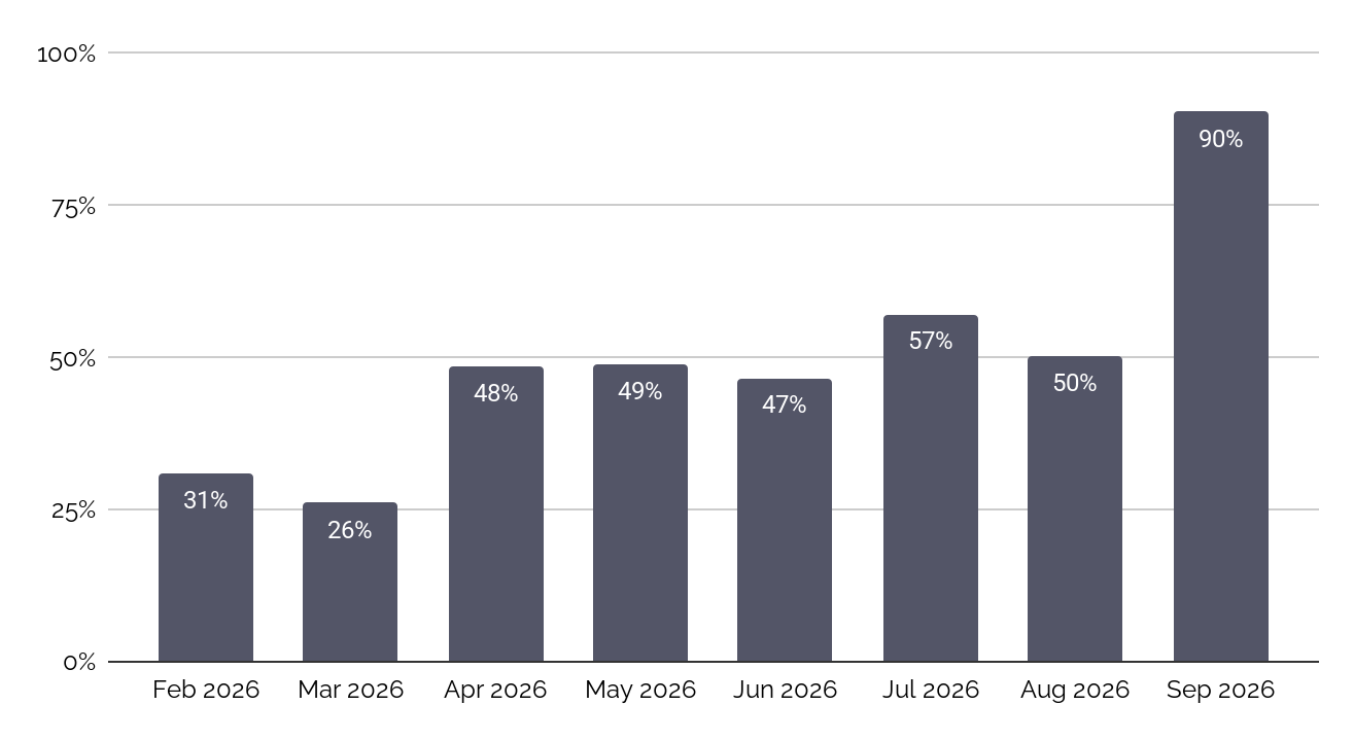
- The share of leads captured automatically grew from 36% in January to 90% in September.
Call attribution
- 100% of inbound calls are now automatically created in the CRMs and attributed to their source, compared with 0% before (calls were previously managed and labeled manually), even though calls account for nearly 40% of all leads.
